
This classic leg of lamb roast is juicy, tender, beautifully browned, and perfectly pink in the center. A simple garlic, rosemary, thyme, and lemon rub gives the lamb plenty of flavor without masking its rich, natural taste.
Start the lamb in a hot oven to develop a deeply browned crust, then finish at a lower temperature until it reaches medium-rare. The key to getting it right isn’t a complicated cooking time—it’s using a meat thermometer and removing the lamb at the right temperature.
Serve it with crispy roast potatoes, lamb gravy, mint sauce, and your favorite roasted vegetables for a classic Sunday or holiday dinner.
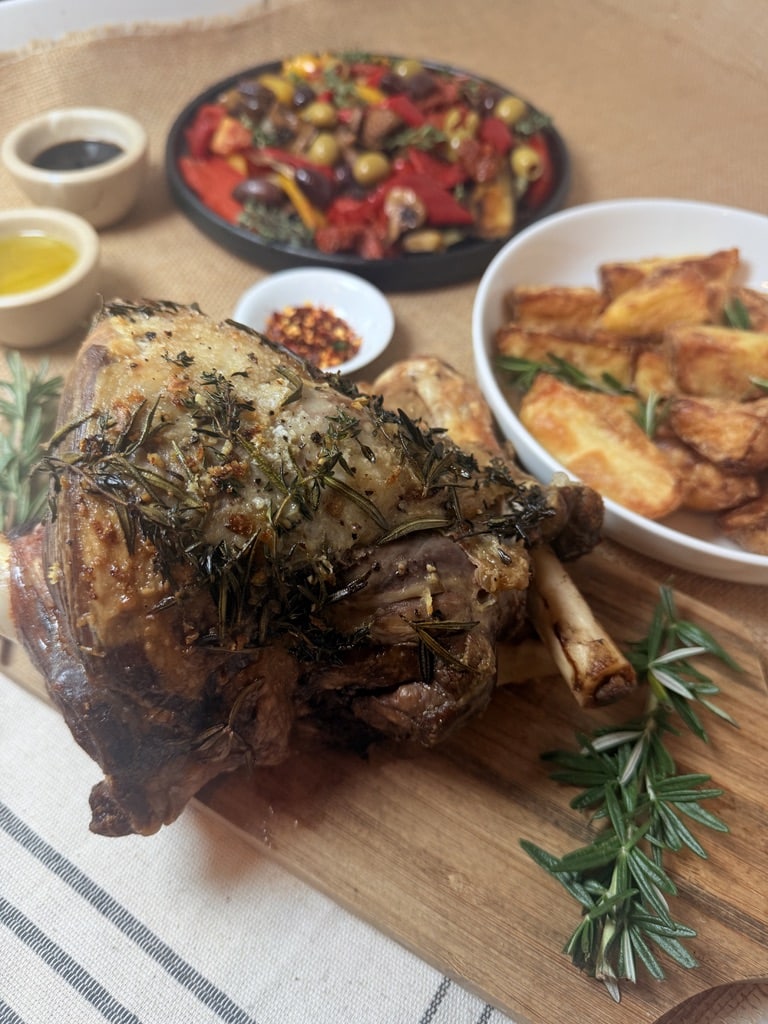
Why You’ll Love This Roast Leg of Lamb
- Juicy and tender: Medium-rare keeps this naturally lean cut moist.
- Simple ingredients: Garlic, rosemary, thyme, and lemon let the lamb shine.
- Beautifully browned: Starting at high heat creates a flavorful crust.
- Easy to get right: A meat thermometer takes the guesswork out of roasting.
- Perfect for entertaining: One roast feeds a crowd and looks impressive on the table.
What Is the Best Cut for Roast Lamb?
A leg of lamb is a relatively lean, muscular cut from the lamb’s hind leg. Unlike lamb shoulder, it has less fat and connective tissue, so it is best suited to roasting rather than long, slow cooking.
That distinction is important.
Classic roast leg of lamb should be tender enough to slice easily, not fall apart like pulled lamb. Cooking it for many hours can make it tender, but it also takes the meat well beyond its ideal juicy, pink texture.
For this recipe, medium-rare is our preferred doneness.
Bone-In or Boneless Leg of Lamb?
You can use either.
Bone-in leg of lamb has a classic presentation and can have excellent flavor. It can also be slightly more difficult to carve.
Boneless leg of lamb is easier to carve and gives you neat, uniform slices. It is often rolled and tied with butcher’s twine.
Whichever you use, rely on the internal temperature rather than the clock to determine when the lamb is done.
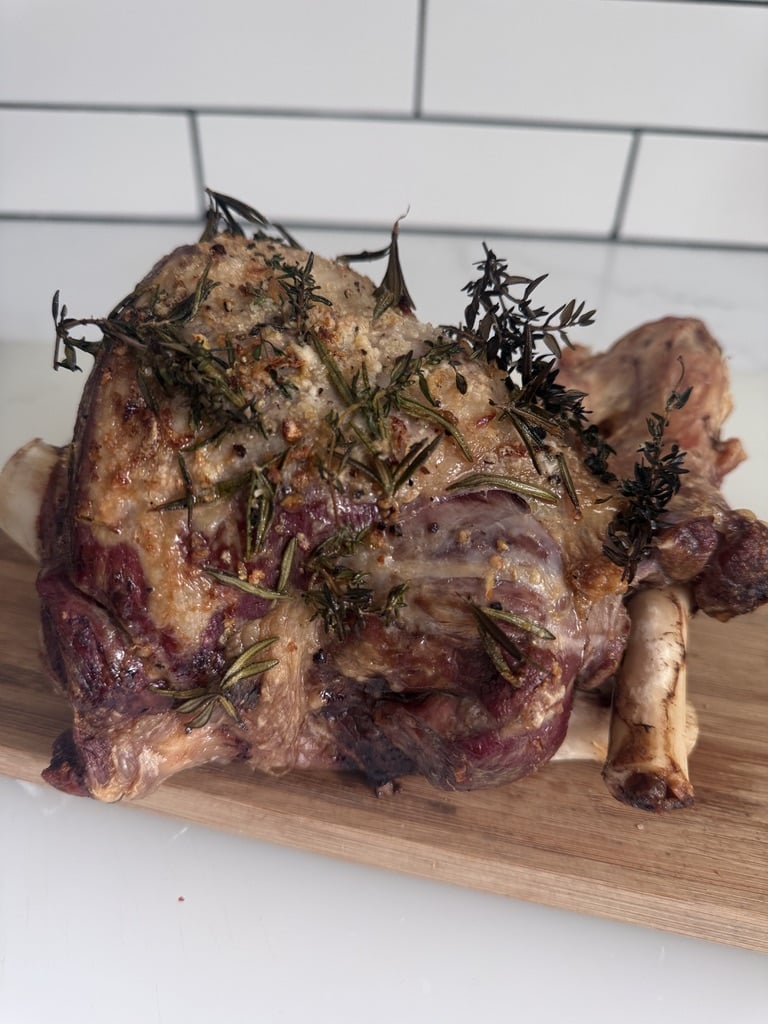
Ingredients

For the Lamb
- 1 (2.2–2.7 kg / 5–6 lb) leg of lamb, bone-in or boneless
- 2 tablespoons extra virgin olive oil
- 6 garlic cloves, minced
- 2 tablespoons finely chopped fresh rosemary
- 1 tablespoon fresh thyme leaves
- 2 teaspoons kosher salt
- 1 teaspoon freshly ground black pepper
- Zest of 1 lemon
How to Roast a Leg of Lamb
1. Bring the Lamb to Room Temperature
Remove the lamb from the refrigerator about 1 hour before cooking.
Pat the surface thoroughly dry with paper towels.
Drying the surface is important because excess moisture prevents the exterior from browning properly.
2. Make the Herb Rub
Combine the olive oil, minced garlic, rosemary, thyme, lemon zest, salt, and black pepper in a small bowl.
Mix into a loose herb paste.
Rub the mixture evenly over the entire lamb, making sure all sides are coated.
3. Prepare the Roasting Pan
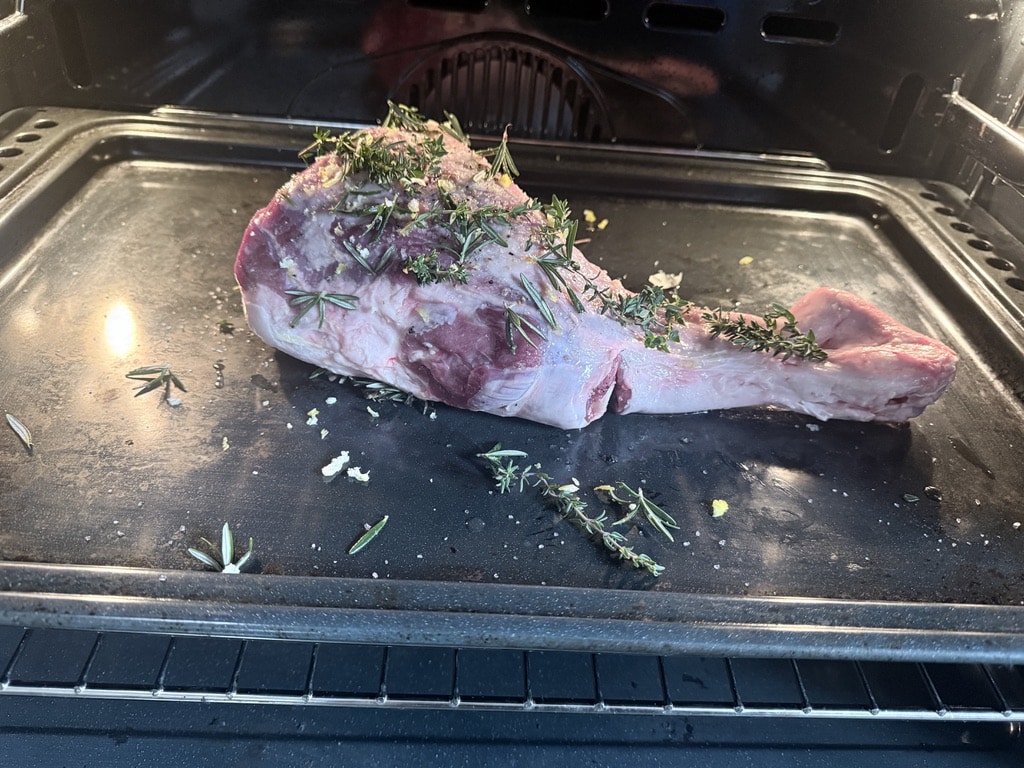
Preheat the oven to 220°C (425°F).
Place the marinated lamb on the tray.
4. Start at High Heat
Roast the lamb at 220°C (425°F) for 20 minutes.
This initial blast of heat helps develop a deeply browned, flavorful exterior.
5. Reduce the Oven Temperature
After 20 minutes, reduce the oven temperature to 180°C (350°F) fan-forced.
Continue roasting until the lamb reaches the desired internal temperature.
For medium-rare, begin checking the temperature after about 40–45 minutes at the lower temperature.
Cooking time will vary considerably depending on the size, shape, and whether the leg is bone-in or boneless, so use the thermometer as your guide.
The Best Temperature for Medium-Rare Leg of Lamb
For juicy, pink lamb, remove the roast from the oven at approximately 53°C (127°F).
During the 20–25 minute resting period, the internal temperature will continue to rise through carry-over cooking.
Aim for a final temperature of approximately 57–60°C (135–140°F).
| Doneness | Remove From Oven | Approx. Final Temperature |
|---|---|---|
| Medium-rare | 53°C / 127°F | 57–60°C / 135–140°F |
| Medium | 58°C / 136°F | 63°C / 145°F |
| Medium-well | 63°C / 145°F | 68°C / 155°F |
| Well done | 68°C / 155°F | 71–73°C / 160–163°F |
Important: Carry-over cooking varies depending on the roast’s size and shape, whether it is bone-in or boneless, and how it is rested. The temperatures above are a guide, not a guarantee of an exact temperature increase.
How to Check the Temperature
Insert an instant-read or leave-in meat thermometer into the thickest part of the lamb.
If using bone-in lamb, make sure the thermometer probe is not touching the bone, as this can affect the reading.
For the most accurate result, check more than one spot in a large roast.
6. Rest the Lamb
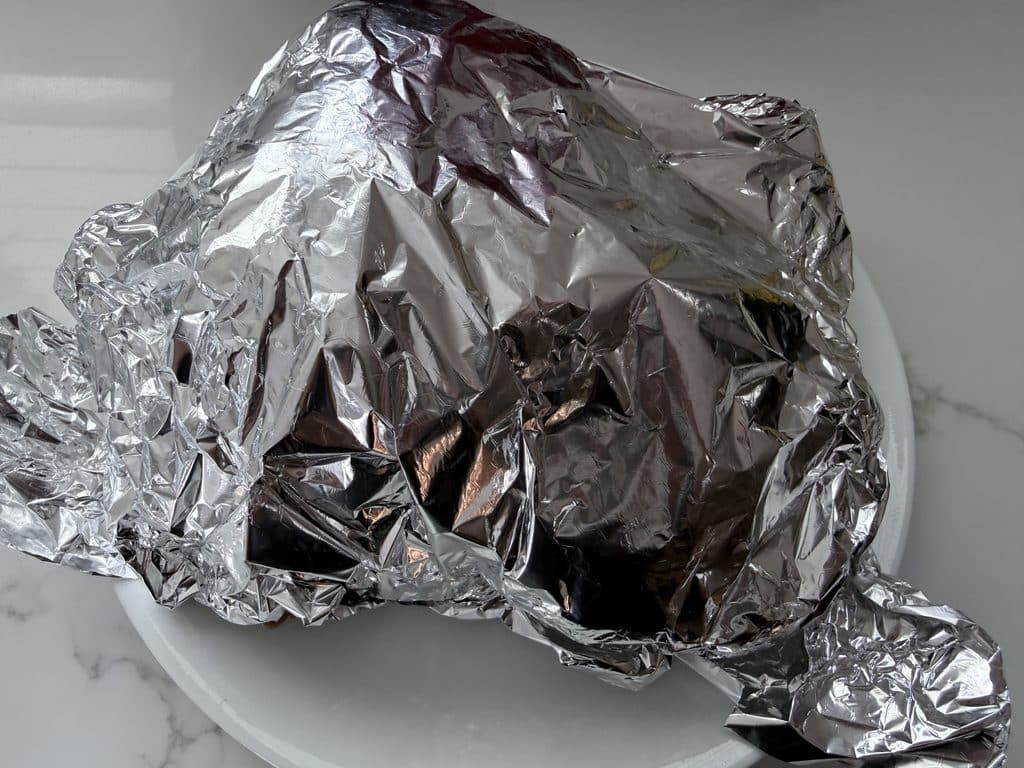
Transfer the lamb to a carving board when it reaches approximately 53°C (127°F).
Loosely tent it with foil and rest for 20–25 minutes.
Don’t skip this step.
Resting allows the juices to redistribute and gives the internal temperature time to rise before carving.
7. Carve the Lamb
Remove the butcher’s twine first if you’re using a boneless rolled leg.
Using a sharp carving knife, slice the lamb against the grain into thin slices.
Arrange the slices on a serving platter and spoon over some of the pan juices.
Hungry for More
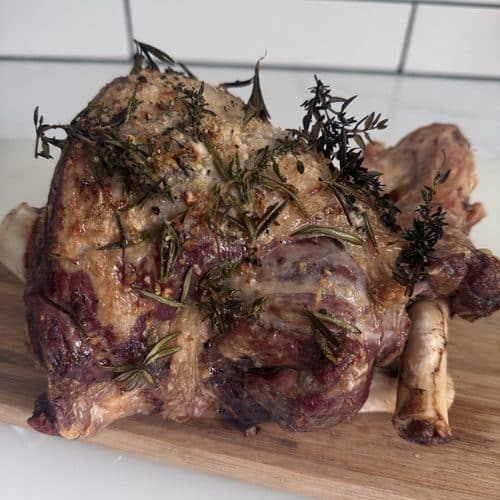
Classic Leg of Lamb Roast
Equipment
- 1 Roasting pan with rack A deep baking tray with a steel rack also works.
- 1 Meat thermometer Essential for determining doneness.
- 1 Small Bowl For mixing the herb rub.
- 1 Sharp carving knife For slicing the lamb against the grain.
- 1 Cutting board For resting and carving the lamb.
- 1 Aluminum foil For loosely tenting the lamb while it rests.
Ingredients
Lamb
- 5 lb leg of lamb Bone-in or boneless; approximately 2.2 kg
- 2 tablespoons olive oil extra virgin
- 6 cloves garlic minced
- 2 tablespoons fresh rosemary finely chopped
- 1 tablespoon fresh thyme leaves
- 2 teaspoons kosher salt
- 1 teaspoon black pepper freshly ground
- 1 lemon zest only
Instructions
Prepare the Lamb
- Remove the lamb from the refrigerator about 1 hour before roasting. Pat thoroughly dry with paper towels.
- Preheat the oven to 220°C (425°F) fan-forced.
- Combine the olive oil, minced garlic, rosemary, thyme, lemon zest, salt and black pepper in a small bowl. Mix into a paste.
- Rub the herb mixture evenly over the entire leg of lamb, coating all sides.
Roast the Lamb
- Insert a meat thermometer into the thickest part of the lamb, making sure the probe does not touch the bone.
- Roast at 220°C (425°F) fan-forced for 20 minutes.
- Reduce the oven temperature to 180°C (350°F) fan-forced and continue roasting.
- Begin checking the temperature after about 40–45 minutes.
- For medium rare lamb: Remove the lamb from the oven when the thickest part reaches approximately 53°C (127°F).
Rest & Serve
- Transfer the lamb to a cutting board and loosely tent with foil. Rest for 20–25 minutes. The internal temperature will continue to rise during resting.
- Remove the butcher’s twine if using boneless rolled lamb. Slice the lamb thinly against the grain and serve.
Notes
Nutrition
Disclaimer
Nutrition facts are estimates. Always check with your healthcare provider before making dietary changes.
Tips for the Best Leg of Lamb Roast
Pat the lamb dry
This is one of the easiest ways to improve browning. Surface moisture has to evaporate before the meat can properly brown.
Don’t skip the thermometer
Cooking time is only an estimate. Two lamb legs of the same weight can have completely different shapes and thicknesses and therefore cook at different rates.
Don’t cook by weight alone
Instead of relying on a formula such as “X minutes per pound,” use weight and time only as rough planning guides and let the internal temperature determine when the lamb comes out.
Don’t add water to the pan at the beginning
A small amount of liquid isn’t enough to steam the lamb when it is elevated on a rack, but there is also no need for it here.
Dry roasting gives you the best opportunity for browning.
If the drippings begin to smoke or burn during cooking, carefully add ¼–½ cup (60–120 ml) hot water or stock to the bottom of the pan, keeping it away from the lamb.
Give the lamb plenty of space
Don’t crowd the roasting pan. Good airflow helps the exterior brown rather than steam.
Don’t cover the lamb while roasting
Keep the lamb uncovered throughout cooking so the herb crust stays dry and browned.
Let it rest before carving
Cutting into the lamb immediately after removing it from the oven can cause the juices to run onto the cutting board.
Slice against the grain
This makes a noticeable difference in tenderness, particularly with a muscular cut such as leg of lamb.
What to Serve With Roast Leg of Lamb
A classic roast lamb dinner is perfect with:
- Crispy roast potatoes
- Lamb gravy
- Homemade mint sauce
- Honey roasted carrots
- Garlic green beans
- Roasted Brussels sprouts
- Greek salad
For the best crispy potatoes, roast them separately. Potatoes need a different cooking time and technique to develop crisp edges and fluffy centers.
Can You Make Gravy From the Pan Drippings?
Yes. Once the lamb is resting, remove the vegetables from the roasting pan and pour the pan drippings into a heatproof jug. Let the fat separate, then use the flavorful juices as the base for a simple lamb gravy or jus.The roasted onion, carrot, celery, and garlic underneath the lamb also add flavor to the drippings.
Frequently Asked Questions
What temperature should leg of lamb be cooked to?
For medium-rare leg of lamb, remove it from the oven at approximately 53°C (127°F). After resting, it should continue to rise toward approximately 57–60°C (135–140°F).
How long does it take to roast a leg of lamb?
There isn’t one exact cooking time. A 2.2–2.7 kg (5–6 lb) leg of lamb generally takes about 65–95 minutes total using the high-heat-then-lower-heat method, but the exact time depends on the shape and type of roast.
Always use a meat thermometer.
Should I roast leg of lamb covered or uncovered?
Uncovered. Roasting uncovered allows the surface to brown and develop a flavorful crust.
Should I sear leg of lamb before roasting?
You don’t need to. Starting the lamb at 220°C (425°F) provides enough heat to develop good browning before you reduce the oven temperature.
Should I add water to the roasting pan?
Not initially. Roast the lamb without liquid for the best browning. If the pan drippings begin to burn, add a small amount of hot water or stock to the bottom of the pan.
Why is my leg of lamb tough?
Leg of lamb is naturally lean and muscular. Overcooking can make it dry and firm. For a juicy classic roast, we prefer medium-rare.
Can I use a boneless leg of lamb?
Yes. Boneless leg of lamb is particularly easy to carve and works beautifully with this recipe.
Is leg of lamb the same as lamb shoulder?
No. Leg and shoulder are different cuts with different characteristics. Leg is leaner and is well suited to roasting and slicing. Shoulder contains more connective tissue and fat and is better suited to long, slow cooking.
How should I store leftover roast lamb?
Refrigerate leftover lamb promptly in an airtight container and use within 3–4 days. You can also freeze cooked lamb for up to 3 months.